Volcanoes National Park
Volcanoes National Park protects the Rwandan side of the Virunga Massif, five of the eight volcanoes shared with Uganda and the Democratic Republic of Congo, and holds roughly a third of the world’s remaining mountain gorilla population across its bamboo forest and volcanic slopes. Beyond the gorillas themselves, the park offers golden monkey trekking, volcano hiking to Bisoke’s crater lake or the considerably more demanding Karisimbi summit, and a genuine piece of conservation history at Dian Fossey’s former research camp.
Volcanoes National Park suits travellers who want the most logistically straightforward gorilla trekking experience available, and who are prepared to pay a meaningful premium for that convenience: at 1,500 US dollars per person, a Rwanda gorilla permit costs nearly double Uganda’s equivalent, but the trade-off is a shorter transfer from the airport, generally gentler volcanic-slope terrain than Bwindi’s dense rainforest, and a park experience widely regarded as the most polished and efficient in the region. Travellers prioritising cost above all else are usually better served in Uganda or the Democratic Republic of Congo; those prioritising ease, speed, and comfort tend to find Rwanda’s premium justified.
The honest trade-off works the other way too. Rwanda’s gorilla trekking, while excellent, does not offer the sector variety Uganda’s Bwindi provides, four distinct regions with genuinely different terrain and character. Volcanoes National Park is a single, more compact trekking area, which simplifies logistics but means less choice in matching a trek’s difficulty to your specific fitness level beyond the family assignment rangers make each morning based on group fitness.
We recommend Volcanoes National Park most strongly to travellers who value time efficiency, arriving and trekking within a day or two of landing, over travellers for whom trekking sector variety or lower permit cost matters more. Both are entirely reasonable priorities; they simply point toward different countries.
Why Volcanoes National Park Matters
A Third of the World’s Mountain Gorillas
The Virunga Massif, spanning Rwanda, Uganda, and the Democratic Republic of Congo, holds roughly half the world’s mountain gorilla population, with the other half in Bwindi. Volcanoes National Park’s share of that Virunga population is substantial, spread across twelve habituated families open to tourism, with daily permit capacity raised to 112 in 2024, eight visitors per family across fourteen total habituated groups including those visited primarily by researchers.
Dian Fossey’s Legacy
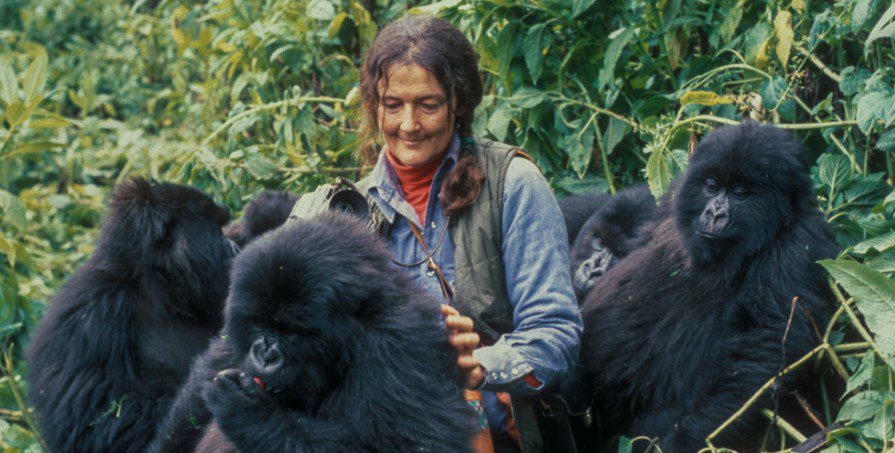
The park’s Karisoke Research Center, founded by the primatologist Dian Fossey in 1967, remains an active site of gorilla research today, and a guided hike to her former camp and grave site, roughly a half-day round trip, offers a genuinely moving piece of conservation history for travellers with an interest in the field’s origins. The annual Kwita Izina gorilla naming ceremony, held each September in nearby Kinigi, celebrates the year’s new gorilla infants and draws considerable attention to the park’s ongoing conservation work.
Golden Monkeys and Volcano Hiking
Beyond gorillas, Volcanoes National Park offers golden monkey trekking, a shorter, less expensive, and highly reliable primate encounter in the park’s bamboo zones, alongside hiking routes up Mount Bisoke, a moderate day trek to a stunning crater lake summit, and the considerably more demanding Mount Karisimbi, a two-day expedition to Rwanda’s highest peak. These activities round out a Volcanoes visit well beyond the headline gorilla trek itself.
Where Volcanoes National Park Fits on a Rwanda Itinerary
The park sits in Rwanda’s northwest, near the town of Musanze, a two and a half to three hour drive from Kigali International Airport on well-maintained roads, among the shortest and most reliable transfers to any major gorilla trekking destination in the region. This proximity allows travellers to arrive in Rwanda one day and trek the next, a genuine logistical advantage over Uganda’s considerably longer transfers to Bwindi.
| From | Approx. Distance / Time | Notes |
| Kigali International Airport | 2.5 – 3 hours by road | Among the shortest, most reliable transfers to any major gorilla trekking site in the region. |
| Nyungwe Forest National Park | 4 – 5 hours by road | The standard pairing for a combined gorilla and chimpanzee trekking circuit. |
| Akagera National Park | 5 – 6 hours by road | Workable as a savannah extension, though it sits on the opposite side of the country. |
| Gishwati-Mukura National Park | 2 – 3 hours by road | A quieter, less-visited addition for travellers with extra time. |
When to Visit
| Season | Months | What to Expect |
| Long Dry Season | June – September | Firmer trekking trails, the most popular months, permits should be booked six to twelve months ahead. |
| Short Dry Spell | December – February | Similarly favourable trekking conditions, slightly less crowded than the June–September peak. |
| Low Season | November – May | Wetter, muddier trekking conditions, but the only window eligible for the 30% permit discount when combined with genuine multi-park travel. |
The low-season discount deserves particular attention: from November to May, gorilla permits drop from 1,500 to 1,050 US dollars for travellers who also spend at least two nights across Akagera and Nyungwe National Parks. This is not a token requirement; Rwanda’s authorities check for a genuine multi-park itinerary rather than a brief token stop, but for travellers already planning to see more of the country, it represents meaningful savings alongside quieter trails and fewer fellow trekkers.
Budgeting for Volcanoes National Park
The gorilla permit itself is Volcanoes National Park’s defining cost, currently 1,500 US dollars per person for a standard trek, with no sector-based pricing variation as Uganda has. Golden monkey trekking is considerably less expensive, and volcano hikes carry their own separate, more modest fees. Accommodation around the park spans a genuinely wide range, from comfortable mid-range lodges to some of the most architecturally striking luxury properties anywhere in East Africa.
| Tier | Approx. Cost (per person/night, excluding permit) | What You Get |
| Budget | US$80 – 180 | Simple guesthouses and community-run lodges in Musanze or Kinigi, basic but functional facilities. |
| Mid-Range | US$200 – 400 | Established lodges with en-suite rooms, mountain views, and included transfers to the trailhead. |
| Luxury | US$450 – 1,200+ | High-end lodges with sweeping volcano and lake views, some of the region’s most distinctive architecture, and private guiding. |
A practical note: the permit cost is fixed regardless of accommodation tier, so travellers on tighter budgets should not feel pressured into luxury lodging to justify the trek. A well-run mid-range lodge close to Kinigi tends to serve most travellers well without the premium of Rwanda’s very top properties.
Where to Stay
- Virunga Lodge, perched on a ridge with sweeping views over the volcanoes and nearby twin lakes, roughly an hour from the park entrance, a genuine luxury standout.
- Bisate Lodge and similar architecturally distinctive luxury properties built directly into the volcanic foothills, offering some of the most striking lodge design in the region.
- Mountain Gorilla View Lodge and comparable mid-range options, generally a twenty-minute drive from Kinigi, offering solid comfort at a meaningfully lower price point.
- Hotel Muhabura in Musanze town, a well-established, tried-and-tested budget-to-mid-range option roughly twenty minutes from the trailhead.
Activities Inside the Park
- Gorilla trekking, the park’s central activity, with treks running two to seven hours depending on the assigned family’s location that morning.
- Golden monkey trekking, a shorter, highly reliable, and considerably less expensive primate encounter in the park’s bamboo zones.
- The Bisoke volcano hike, a moderate full-day trek to a striking crater lake summit.
- The considerably more demanding Karisimbi summit expedition, typically a two-day trek to Rwanda’s highest peak.
- A guided hike to Dian Fossey’s former research camp and grave site at Karisoke, a half-day round trip rich in conservation history.
Rangers assign trekkers to specific gorilla families each morning at the Kinigi park headquarters, generally based on group fitness levels, and the trek itself remains unpredictable in length and difficulty by nature, since it depends on where the assigned family has moved since it was last located.
Planning Advice
- Book gorilla permits six to twelve months ahead for June–September travel, given the fixed daily capacity and consistently high demand.
- Consider the November–May low season specifically if the 30% permit discount matters to your budget, but plan a genuine multi-park itinerary including Akagera and Nyungwe to qualify.
- Hire a porter regardless of fitness level; this is both practically useful on steep, muddy terrain and a direct way of supporting the local community economy.
- Pack proper hiking boots, gaiters, and rain gear regardless of season, since volcanic terrain and altitude bring unpredictable weather even in the drier months.
- Combine gorilla trekking with a Kigali stay either before or after, since the city itself offers a worthwhile cultural stop and sits directly on the route to the park.

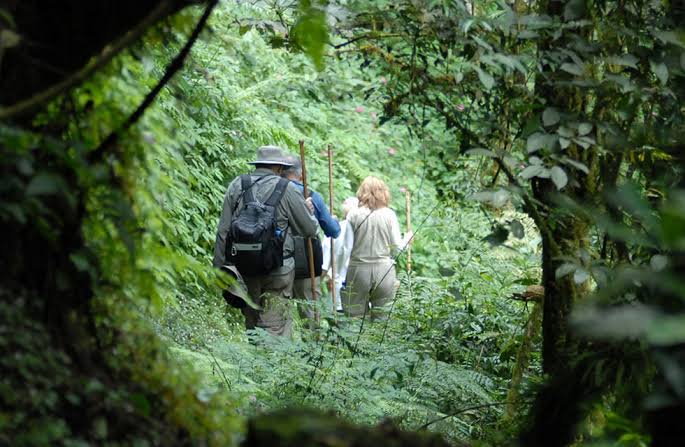
Nature Walks in Volcanoes National Park
Who Volcanoes National Park Suits Best
| Traveller Type | Recommendation |
| First-time trekker prioritising convenience | Excellent fit; Rwanda’s short transfer and organised infrastructure are hard to match. |
| Budget-conscious traveller | Better served by Uganda’s considerably lower permit cost, unless travelling in the discounted low season with a genuine multi-park itinerary. |
| Traveller wanting volcano hiking alongside gorillas | Strong candidate given Bisoke and Karisimbi’s accessibility from the same park. |
| Honeymoon or luxury-focused traveller | Excellent fit, given Rwanda’s exceptional architecturally distinctive luxury lodges. |
| Repeat gorilla trekker seeking sector variety | Better served by Uganda’s Bwindi, which offers four genuinely different trekking sectors. |
| Traveller building a combined multi-park Rwanda circuit | Ideal anchor, given the park’s proximity to Kigali and reasonable links to Nyungwe and Akagera. |
Frequently Asked Questions
How much does a Rwanda gorilla permit cost?
1,500 US dollars per person for standard trekking, with a 30% discount to 1,050 US dollars available from November to May for travellers who also spend at least two nights across Akagera and Nyungwe National Parks.
How does Rwanda’s gorilla trekking compare to Uganda’s?
Rwanda offers a shorter transfer from the airport and generally gentler volcanic-slope terrain, at a meaningfully higher permit cost. Uganda offers considerably lower permit fees and greater sector variety across Bwindi’s four trekking regions, at the cost of longer transfers and steeper terrain in places.
How long does a gorilla trek take in Rwanda?
Typically two to seven hours round trip, depending entirely on where the assigned family has moved since rangers last located it. Once found, visitors spend a maximum of one hour with the gorillas.
Can I do golden monkey trekking and gorilla trekking on the same Rwanda trip?
Yes, and many visitors do both, since golden monkey trekking is considerably shorter, less expensive, and highly reliable, offering a worthwhile complement to the gorilla trek within the same park.
What is the minimum age for gorilla trekking in Rwanda?
Fifteen years old, a rule strictly enforced by the Rwanda Development Board for the safety of both visitors and the gorillas.
Should I hike Bisoke or Karisimbi while at Volcanoes National Park?
Bisoke is a moderate full-day hike suited to most reasonably fit travellers, rewarding them with a striking crater lake summit. Karisimbi is a considerably more demanding two-day expedition better suited to experienced, well-prepared hikers specifically seeking that challenge.